Homes Are Getting Smaller. 5 Smart Ways Families Are Rethinking Kid’s Bedrooms
Walking through a new housing development in York or looking at a converted Victorian terrace shows a clear trend in modern British architecture. While we still want comfort, the size of our homes is getting smaller.
Recent housing surveys indicate that the average size of new homes in the UK has been decreasing over the past few decades. Many master bedrooms are now smaller to make space for en-suites, and third bedrooms often serve as tiny study areas.
This change is important because it encourages creativity. It’s not just about fitting in furniture anymore; it’s about how we can live efficiently in the space we have.
For parents, this change is especially clear in children’s areas. The old idea of a large playroom is fading in favour of smarter, more organised spaces.
As bedrooms become multi-functional areas for sleeping, studying, and playing, families are finding clever ways to make the most of the space they have.
At Crossways York, we help you understand the changing local life and home design by showing how our community adapts to these new challenges.
Smart Ways to Rethink Kid’s Bedrooms
Here are the five smart ways families are rethinking kids’ bedrooms:
1. Maximising The Potential Of Vertical Living
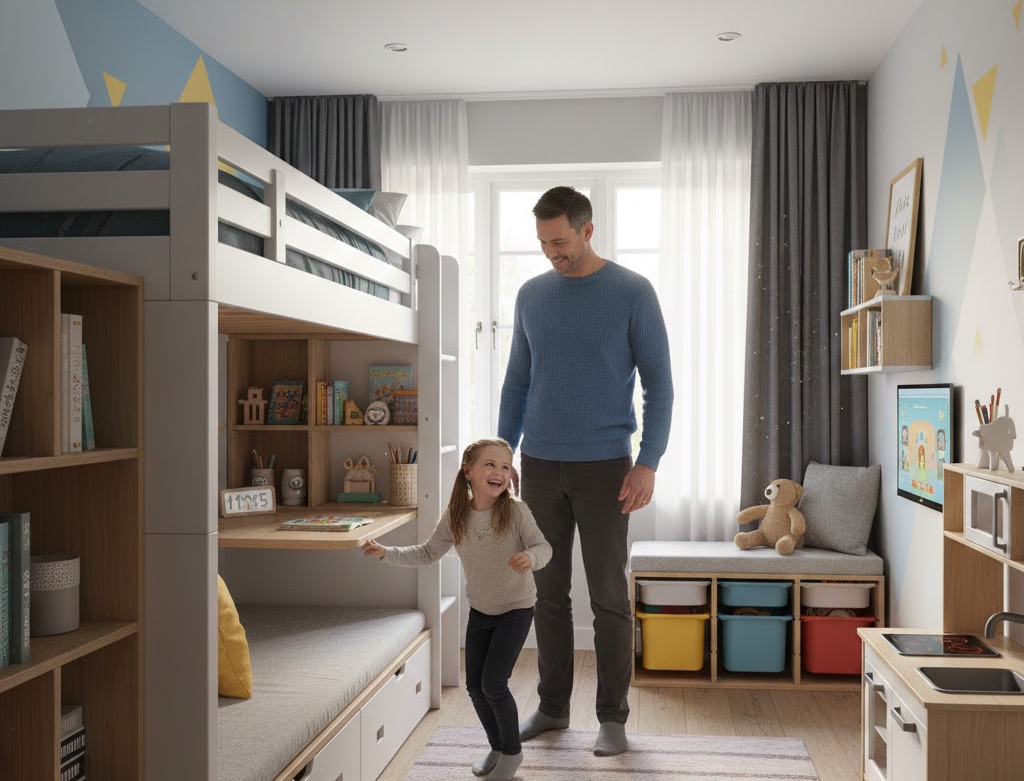
When space is limited, the best solution is to use vertical space. A major trend in the UK home design is moving from standard low beds to high sleepers and mezzanine beds. By raising the sleeping area, a family can effectively double the usable space in a small room. This design is not just for siblings sharing a bunk bed anymore; it helps create an open floor space for movement.
A high sleeper allows for a full-sized desk or a creative area to fit under the mattress. This setup makes the room feel cluttered because the bed is no longer at eye level. In many older homes in York, where ceilings are high, but floor space is narrow, this approach is constructive. It adds excitement for children while providing the space they need for schoolwork or hobbies as they grow.
2. Investing In Multi Purpose Furniture
The use of single-purpose furniture is gradually fading in modern homes as families now choose items that offer at least two distinct uses. For example, a window seat can easily include deep storage for bulky bedding, while a sleek desk might fold away into a wall unit once the school day is over. This method helps to reduce the number of individual items touching the floor, which naturally makes small rooms feel open and purposeful.
Rather than cramming already tight rooms with extra furniture, families are becoming far more selective about what earns its place in a child’s bedroom. Beds, in particular, are expected to carry more weight than they once did, offering storage, flexibility, and room to grow. You see the same shift in other space-conscious cities too.
In cities like Dubai, where compact layouts are common, kids beds in Dubai are often designed around custom sizing and built-in storage, shaped by the same need to make every square metre count.
3. Prioritising Built-In Storage Solutions
A heavy, freestanding wardrobe can make a small bedroom feel cramped and dark. To solve this, many homeowners are choosing built-in storage that blends into the walls. Floor-to-ceiling cupboards without any handles make the storage almost invisible. This design looks like a solid wall, keeping the room’s lines clean and avoiding bulky corners.
Built-in storage also makes good use of awkward spaces found in several UK homes, like under the eaves of a loft conversion or next to a chimney breast. Custom shelves can turn these unused areas into a library or a display for special items. When storage is built into the building, you do not need as many small drawers, which makes the room look tidier.
For clearer insights into making the most of every inch, explore this storage guide that shows you how to implement storage hacks for a more efficient, organised life.
4. Designing for Longevity and Adaptability
In the past, many parents decorated their child’s room with specific themes, but kids would quickly outgrow them. Nowadays, families take a more sustainable method. They choose neutral colours and high-quality materials that can last from a nursery to a teenager’s room with little effort. This flexibility is essential when you don’t have an extra room to switch into as needs change.
In 2026, UK homeowners increased their spending on home renovations by 26%. This showcases that more families are focusing on upgrading and personalising their living spaces for long-term use instead of making instant and temporary fixes. Families are prioritising the quality and durability of their homes.
Modular furniture is key to this approach. Instead of buying a small toddler bed, parents invest in adjustable or convertible beds. They also select desks that can be adjusted in height and wall storage that works for toys now and textbooks later.
By focusing on a classic look, the room doesn’t require a complete makeover for every birthday. This careful planning saves money and reduces clutter by avoiding the need to constantly replace items as kids grow, allowing the room to change naturally as the child grows.
5. Creating Flexible Tech And Play Zones
Children’s play and learning have changed a lot, and their bedrooms are following suit. Organised hobby stations are replacing big toy boxes filled with plastic toys. As more entertainment becomes digital or focused on specific interests like LEGO or art, older children need less space for physical toys. This shift is making bedrooms feel more like mini studios or creative workspaces.
Families are now focusing on one or two main activities instead of trying to include everything in the room. They often choose a comfortable chair and slim desk instead of a large play area.
By simplifying their belongings, the bedroom stays tidier and feels more peaceful. This reduction in items is an effective way for families to reclaim their homes. It reflects a shift in thinking that values a good living space over having many things.
Conclusion
The UK home is changing, and smaller spaces can still be helpful. By rethinking how we design our homes, families show that even the tiniest rooms can be creative and restful.
Instead of trying to make our homes bigger, we focus on using the space we have more effectively. This mainly includes using vertical space, adding built-in storage, and even choosing furniture that serves multiple purposes. As a result, contemporary bedrooms are becoming examples of smart design.
These changes reflect a trend toward living more thoughtfully. With less space, we are more careful about what we bring into our homes. This results in better choices and a living space that meets individual needs. In the future, homes might be smaller, but the ideas we use to fill them are bigger than ever.